
DOC Mugshots and Profile Scope
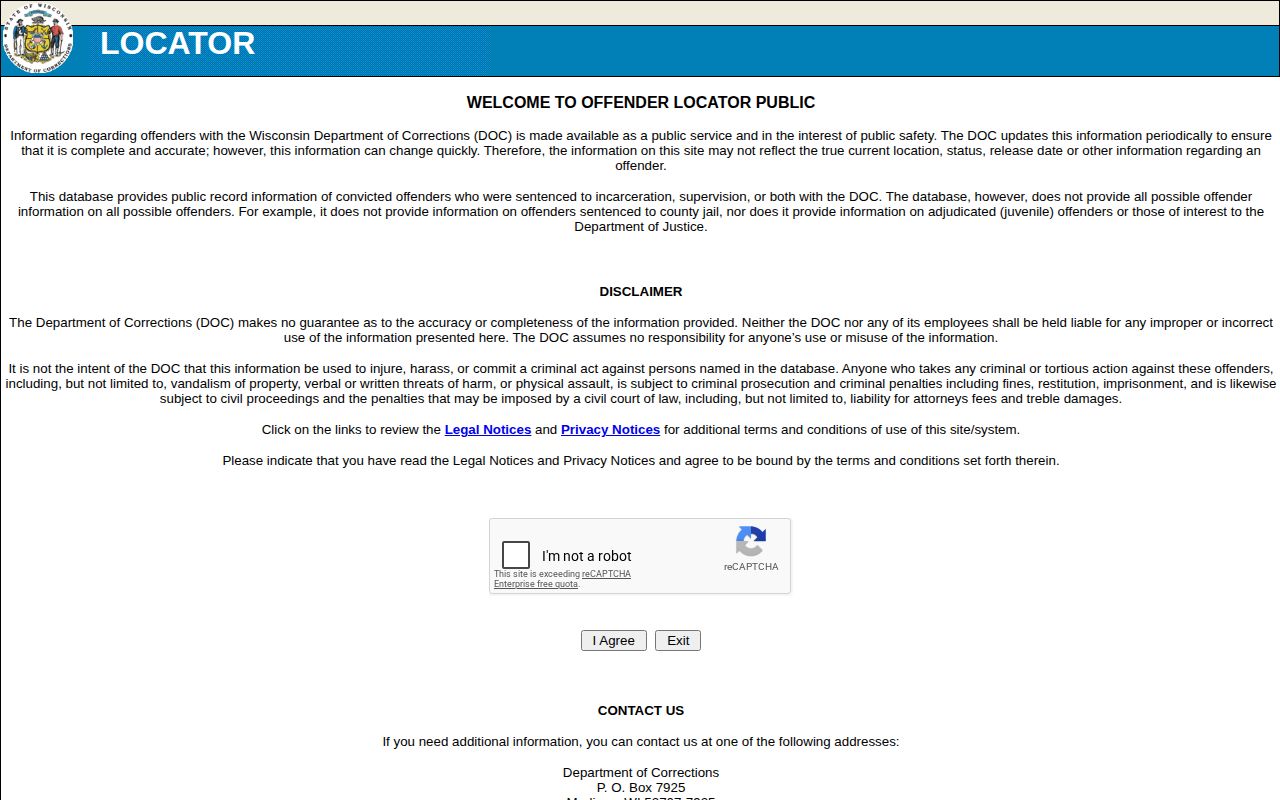
DOC stands for the Wisconsin Department of Corrections. Its Offender Locator searches people convicted and sentenced to incarceration, supervision, or both. Think of it as the state-prison layer of Wisconsin records. It won't replace a sheriff's roster, a police report, or a court file.
The locator states its limits plainly. County-jail sentences are out. So are adjudicated juveniles and some people of interest to the Department of Justice. Updates happen periodically, so a location, status, or release date can lag. The page also warns against harassing anyone named in the database. Read the notice before you search.
A profile may include an identification photo. DOC promises no image for every result. Some people have records with no public photo, and the interface itself can change. Photos exist for identification. One is not proof of a new arrest or of current custody at the listed institution.
Begin at the official Wisconsin DOC Offender Locator, and read its scope and safety notice first.
Search the Wisconsin DOC Locator
The public search sits behind an agreement notice and Google reCAPTCHA. Field layouts can shift. Trust the live form over any old screenshot. A name match alone never confirms identity.
- Open the DOC Offender Locator and read the legal, privacy, and safety terms before continuing.
- Complete the agreement and CAPTCHA. Enter the most specific identifier the form accepts. A DOC number can help if known and accepted; otherwise use the person’s name and narrow the results with the available fields.
- Compare the returned name with middle initial, aliases, age or birth information, and other details. The workflow has documented fields for name, middle initial, aliases, phonetic matching, race, gender, birth year, age range, and address.
- Open the matching profile and review the DOC number, offense or status information, location information, and any displayed photo. Record when the result was checked because the database can change.
- If no match appears, check the city or county jail route and VINELink where available. Do not infer that the person has no record or was never arrested.
| Search field | How it helps |
|---|---|
| Name and middle initial | Narrows a name search, but a common name still needs other identifiers. |
| Aliases and phonetic match | May help when a name has another spelling or an alternate name appears in the record. |
| Race, gender, birth year, age range | Additional filters documented in the public workflow. Use more than one where the current form allows. |
| Address | A documented search field that may help narrow results. Current field labels and order can change. |
| DOC number | Use when known and accepted by the live form; the research did not confirm that it is always a public input field. |
Reading a result takes care. A person might be in DOC custody, out on supervision, or missing from the locator because the database shifted. The profile is a snapshot of a public record. It is not a status certificate for any other purpose.
Wisconsin DOC Profile Fields
The profile comes from the DOC system, so it holds conviction and supervision details rather than a county arrest. A search can return identity, offense or status, location, and a DOC number. A photo may appear too. Not every profile shows one. Fields change, so check the live page.
| Profile item | What to understand |
|---|---|
| Identity and DOC number | Use the number and other profile details to distinguish people with similar names. |
| Offense and sentence status | Indicates the conviction or supervision record in DOC’s scope. It is not an charge from a new county booking. |
| Location or supervision details | Can be subject to change and may not reflect the current location or status. |
| Identification photograph | May be displayed on a public profile. DOC does not promise a public photo for every result. |
The locator skips confidential and excluded records. It does not list everyone held in a Wisconsin jail or everyone arrested in the state. Justice agencies keep other lists. A blank result reflects the limits of this search, not proof about a person's history.
How Wisconsin DOC Updates Photos
Photo upkeep follows a set routine under DOC Policy 306.00.06, Person in Our Care Photo Identification System. Facilities retake photos at least every five years. Staff also watch for major changes in appearance. A new tattoo, disfigurement, or a shift in hair can trigger a fresh image. The policy calls for front, right-profile, and left-profile views against a neutral gray background.
There's also a photo before release or discharge. That process is internal. It doesn't promise any particular view will appear on the public locator. The public profile shows only what DOC releases.
The schedule explains why a DOC image and a later county booking photo can look different. Different dates, different custody stages. A mismatch in appearance doesn't make either record wrong. If you need a specific image, note its approximate date plus the DOC record or institution that might identify it. The public profile won't expose every photo held internally.
Visibility for former offenders is not guaranteed. The locator covers people sentenced to incarceration, supervision, or both. A person's status change can alter the system entry. Old entries can vanish. DOC discusses release dates but promises nothing about staying searchable after discharge. Check the current locator rather than trusting an old profile to stay online.
DOC Photos Versus Jail Photos
County booking photos and DOC profile photos come from separate agencies at separate stages. Someone booked and released by a county may never show up in the state locator. The reverse happens too. A prison sentence or DOC supervision can create a state profile with no current county jail roster entry.
| Record source | Custody stage | Photo and status limits |
|---|---|---|
| County sheriff or jail | Arrest intake and local custody. | Roster timing, photo display, fields, and retention vary by county. A released person may leave a current list while the record remains with the custodian. |
| City police department | Arrest investigation and incident reporting. | May hold the arrest report even when the booking takes place at a county jail. |
| Wisconsin DOC | State incarceration or supervision after sentencing. | Profile can show an identification image, but display and former-offender visibility are not guaranteed. |
| Wisconsin court system | Case events and disposition. | WCCA is a case-summary tool, not a photo search, and some matters are restricted. |
For a local booking, use the Wisconsin County Directory. It links each county's official roster and records route. Keep the arresting agency, custody agency, DOC profile, and court case separate when comparing results.
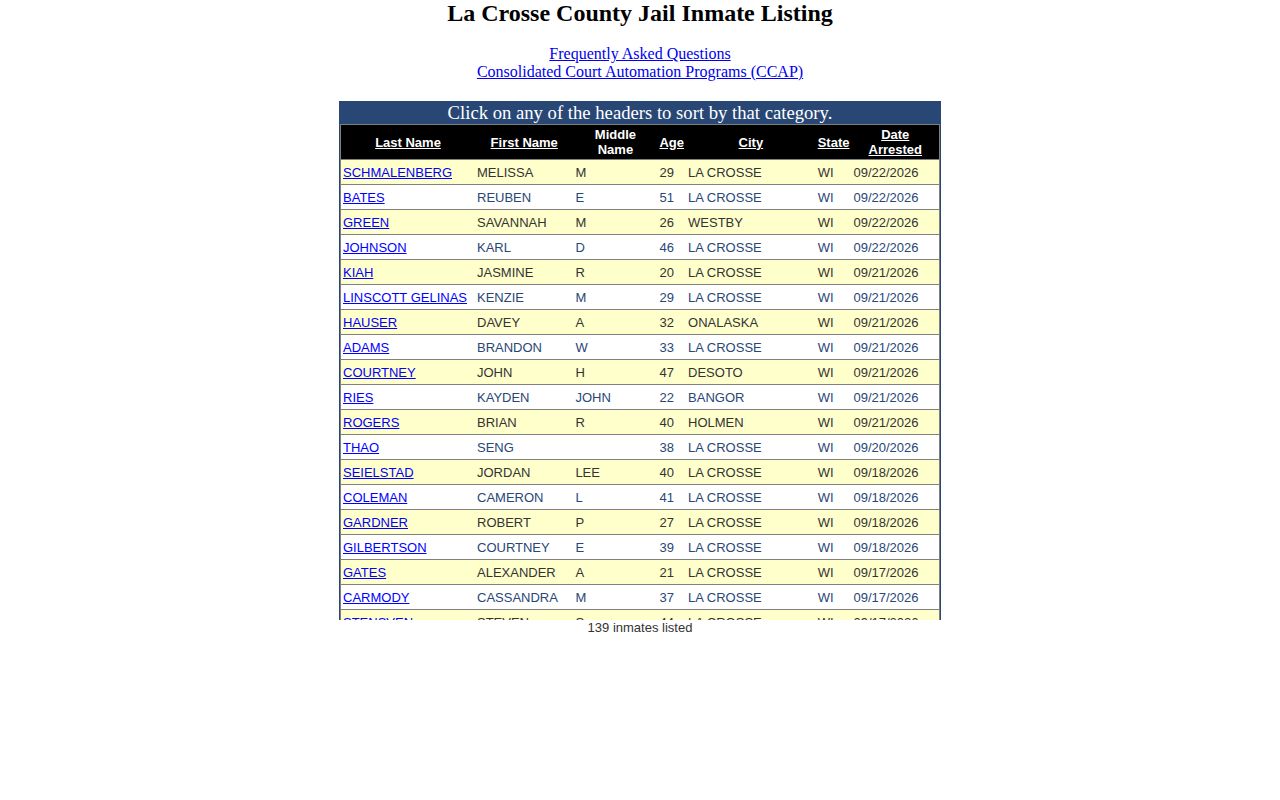
Local jails handle their own booking photos. A county system like the official La Crosse County Inmate View shows that layer.
Request Wisconsin DOC Records
When the locator shows no photo, a records request is the next step. Wisconsin DOC runs a public-records request portal for exactly this. Name the person in full. Add the DOC number if you have it. Describe the exact photo or record you want, the date or facility involved, and whether you prefer an electronic copy. A tight, specific request lets staff locate the right item and apply Wisconsin's release rules and any needed redactions.
The state's open-records law still governs the answer. An authority must respond as soon as practicable. No fixed number of days applies statewide. Volume, legal review, clarifying questions, and redactions can all stretch the timeline, so ask for an estimate before agreeing to a large copying bill. Wisconsin sets no flat statewide DOC fee or turnaround for every request.
Keep this route for ordinary agency records. Medical material has its own protected process. Media inquiries go through a separate communications path. When asking for an identification photo, name the image and a date range instead of requesting a broad batch.
The strongest request points to a record DOC already keeps. "Send everything on this person" can sprawl across systems and years. Naming the photo tied to a DOC number and a date range works far better. No DOC number handy? Give the full name plus other non-sensitive identifiers, and mention the institution or supervision period when you know it.
- Confirm that DOC is the likely custodian by checking the locator’s scope and the person’s state sentence or supervision connection.
- Describe the specific item, such as a profile photograph, status record, or dated agency document, and include the relevant time period.
- Submit through the public-records portal and keep the request confirmation so any clarification can be tied to the same request.
- Review the response for the record date and any redactions. If access is denied or limited, ask which legal basis applies to the withheld portion.
Wisconsin's public-records law opens existing records. It does not force an agency to build a new report, answer a research question, or stitch together a custom history. The access statute works alongside statutory limits and the balancing test in Wis. Stat. § 19.36. A custodian may release records with protected details cut out. Law or the public-interest balance can also support withholding material entirely. So a photo request guarantees nothing.
Keep each agency's request separate. A county sheriff holds its own jail booking records. A city police department may hold the arrest report. The circuit-court clerk keeps the case file. DOC cannot hand over a county roster just because someone later entered state custody. Nor does a DOC profile settle an earlier booking. The agency that keeps the record is the place to start.
The official Wisconsin DOC request portal is the entry point for DOC-held records.
The state’s public-records guidance explains the general timing and access standard.
Check the Wisconsin Court Result
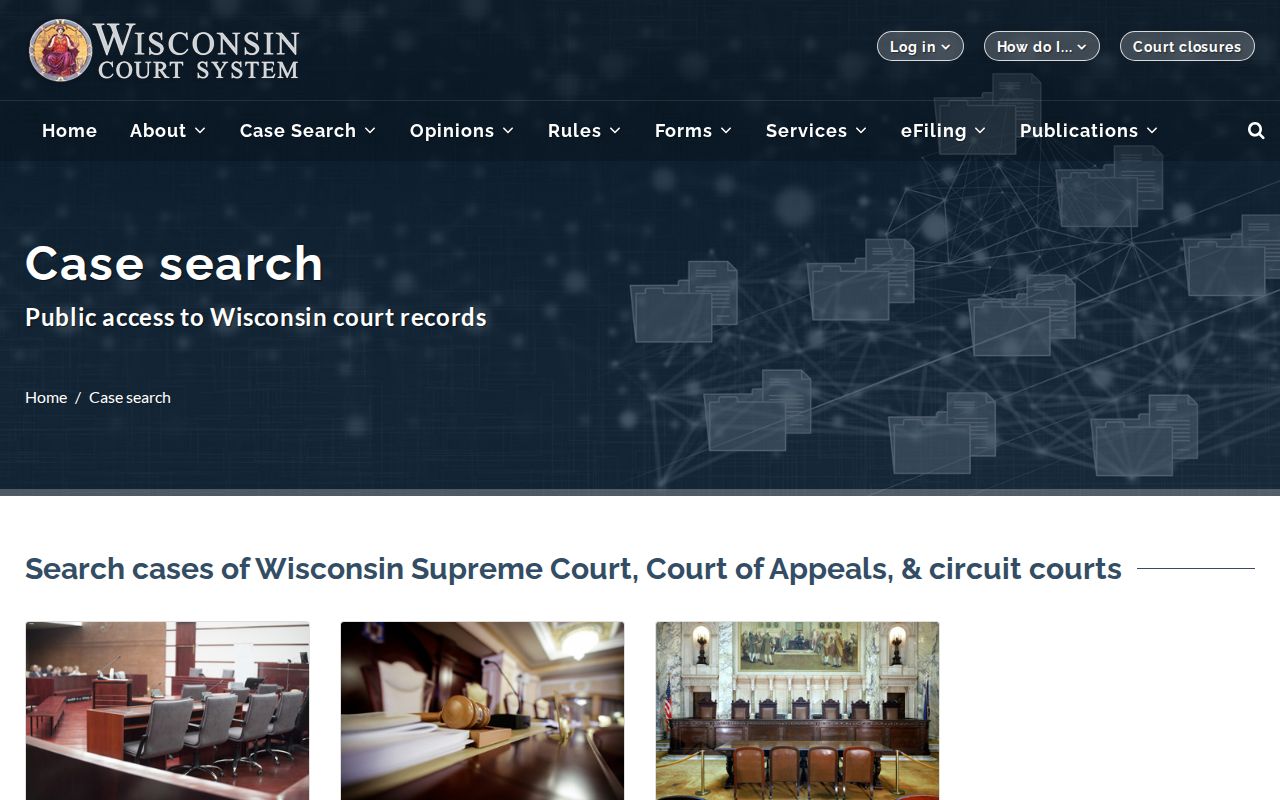
A DOC profile never replaces the court record behind a sentence. That record lives in the courts. Wisconsin Court System Case Search links to circuit-court summaries through WCCA and to appellate search. A name, county, case number, or date narrows the hunt when the public interface supports it.
WCCA shows charges, hearings, judgments, sentence terms, and status. It is not the full file. Confidential, sealed, expunged, and juvenile matters may be absent. The clerk of circuit court holds the official record. For a certified copy, call the clerk instead of relying on an online summary.
Try Wisconsin's Case Search for public case summaries.
When DOC Search Finds No Match
A blank DOC result can mean several things. The person might sit in a county jail. They may already be released. A juvenile or otherwise excluded record stays out of public view, and the data may lag behind a recent change. Federal prison and immigration custody each run their own locators. The DOC site itself directs users back to city and county jails when a search fails.
Route the search by agency. Local custody starts with the county or city office tied to the arrest. Court results come from WCCA or the circuit-court clerk. The federal locator shows no booking photos. The ICE locator covers only its own detention scope. These systems are not interchangeable. Match a result on more than a name.
A county roster captures local custody at one moment. It can miss someone released, moved, or booked through another county. A court summary answers a different question by listing public case events and results. A DOC profile covers the state sentence or supervision layer. Compare agency, date, and record type before calling two results the same event.
Silence online does not end the hunt. A narrow records request can still ask the right agency to search what it holds. County for booking material. Police for the incident or arrest record, DOC for its profile or photo, the clerk for a court file. Juvenile and confidential records carry extra access limits. Never use an online absence to reconstruct a protected identity.