
Wisconsin Wanted Alerts
Wisconsin publishes no single statewide search for every wanted person or open warrant. Instead, alerts travel through dedicated channels. The Wisconsin DOJ Crime Alert Network sends public-safety bulletins. Local, state, federal, and tribal agencies issue them. A notice might involve a suspect or a missing person. Anyone can sign up to receive the alerts. Timing matters here. An agency can update, withdraw, or narrow a notice as a case shifts. Treat each item as a dated bulletin from its source rather than a standing warrant list or a statewide mugshot feed.
The DOJ public-safety resources page gathers current alerts. A notice appears only when an agency issues one. For a specific case, start with the originating agency's bulletin. Use its tip instructions exactly as written. The DOJ alert page also explains the Crime Alert Network and its public sign-up path.
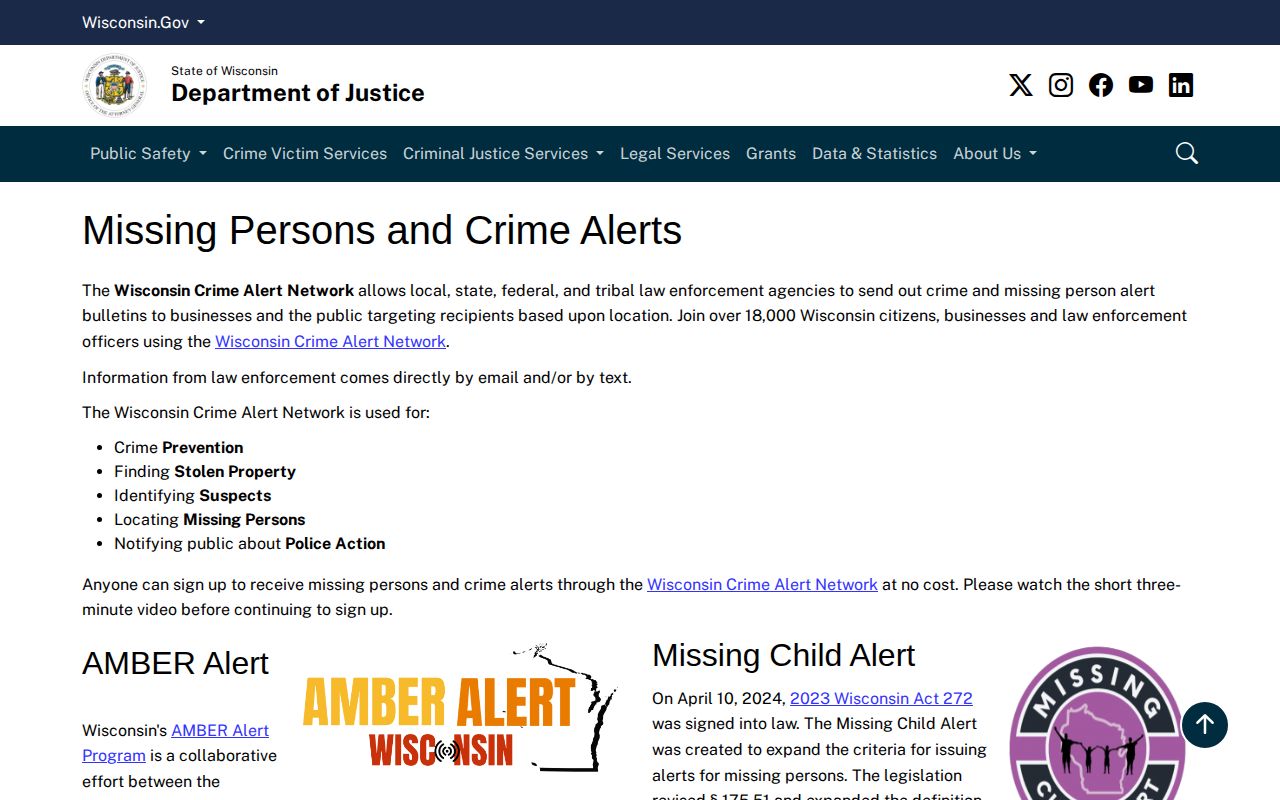
Each alert may link to the issuing agency's own page. That page holds the current details and tip instructions.
Official Wanted List Inventory
Wisconsin's wanted lists are split by agency and purpose. There is no shared search box. No shared update schedule either. Statewide sources make no promise to show a photograph, and county and city agencies often post alerts of their own. Always check the issuing agency's page for the current version and the right way to send information.
| Official source | What it covers | Photo and coverage limit |
|---|---|---|
| Wisconsin DOJ Crime Alert Network | Time-sensitive alerts from local, state, federal, and tribal law enforcement, including suspect and missing-person notices. | Not a permanent list of all warrants and not a statewide booking-photo feed. Details and any image depend on the specific alert. |
| Wisconsin Department of Corrections (DOC) automated victim notices and the DOC Offender Locator | Victim-notification events and public status information for people in the DOC system. | Not a public absconder gallery. DOC does not promise that every supervision event is searchable as a fugitive record. |
| U.S. Marshals Eastern District profiles, plus the official Eastern and Western District pages | Federal fugitive routes for the Eastern and Western Districts; the Eastern District page displays selected profiles. | Selected profiles are not exhaustive. The Eastern route includes profile photographs; check each district's page for its current material. |
| County sheriff and local police notices | Local alerts tied to the agency and jurisdiction that issued them. | There is no shared statewide county-list format. Use the correct county's official agency route. |
These channels are not a census of active cases. Some agencies keep no public wanted page at all. A missing online notice, in other words, does not mean no warrant or supervision action exists.
Read a Wisconsin Wanted Notice
A wanted bulletin can carry a name, an agency, a description of the conduct, and a safe way to report what you know. Details vary by source and case. Not every notice uses the same fields. A photograph may be out of date. Old search results can mislead. Go to the source page itself and look for an update date or a statement that the notice has been cleared. When a notice provides them, check these details before acting on it:
- The issuing agency and the county or federal district responsible for the matter.
- The name and other identifiers shown by that agency, rather than a name match alone.
- The date of the notice or the last update, if the source displays one.
- The official tip method and any limits on what the public should do.
An alert photo may help an agency. It is not proof the viewer has found the right person. Images age. Faces resemble each other, and search caches can hold notices that were removed long ago. Confirm identity and current status with the issuing office. Never repost a photo as a claim of guilt.
Wisconsin DOC Absconder Status
The Wisconsin Department of Corrections runs two related but separate public paths. The Offender Locator is a search tool for people sentenced to incarceration, supervision, or both under DOC. It does not cover everyone an investigator might want. County jail inmates held there rather than under state sentence stay out of it. It is not a booking roster either. A missing result calls for a check with a different jurisdiction, not an assumption about a person's history.
DOC victim-services material lists automated notices for “Absconded” and “Absconder Return to Supervision.” An absconder notice reports a supervision event. It is not a new conviction. It also does not create a separate criminal warrant. DOC does not promise that every such event appears as a searchable public record. Use the locator for a profile. Use the victim-services route for notifications.
The Wisconsin DOC Offender Locator shows the official search entry and its point-in-time service notice.
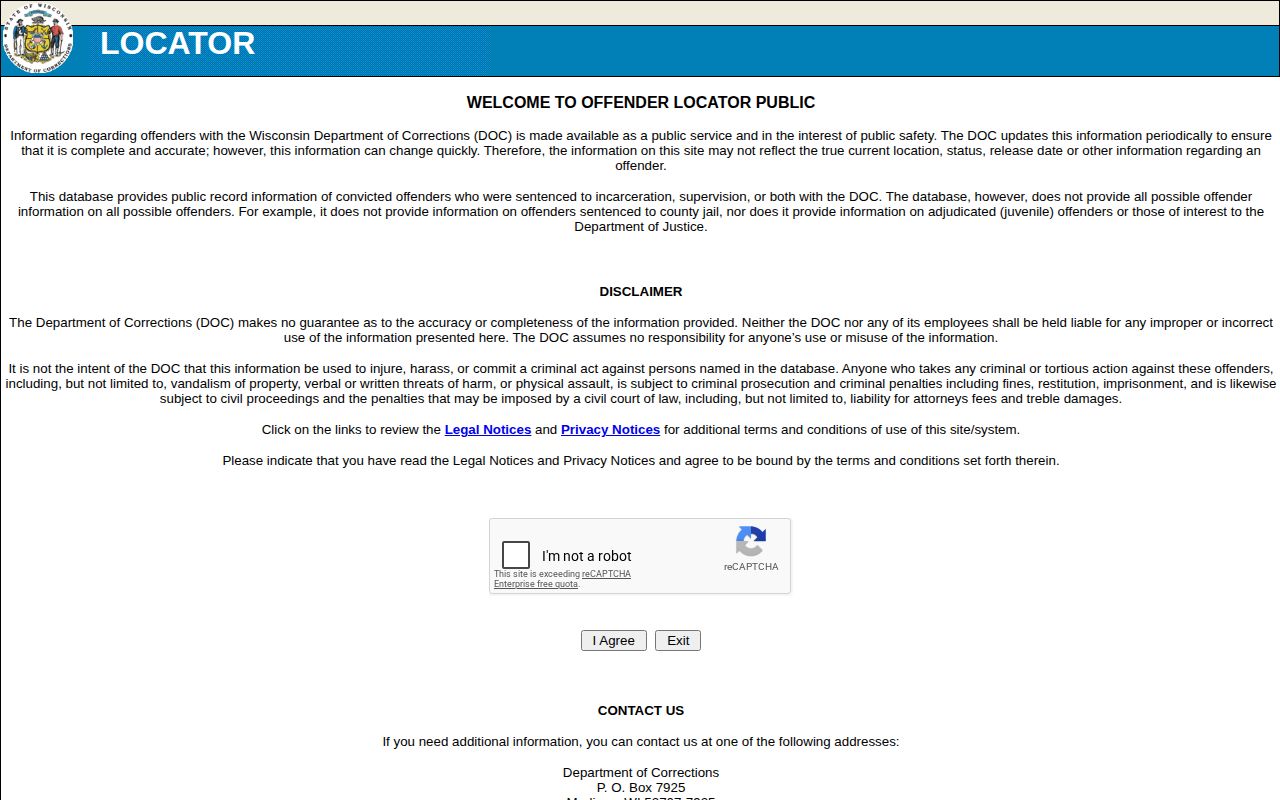
DOC warns that its records change fast. Note the date of any status result. Before relying on it, verify again with DOC or the responsible agency.
U.S. Marshals District Profiles
The U.S. Marshals Service splits its Wisconsin fugitive work between two districts. Each publishes its own pages. The Eastern District of Wisconsin profiled-fugitives page highlights chosen cases with photographs. The Eastern District page and Western District page provide agency contacts. These are the official starting points. These are federal routes. They are not a statewide county-warrant search.
"Selected" is the word to watch. The Marshals profile someone when they want public help finding that fugitive. A profile is a choice, not a roster. It does not list every federal warrant or every person held before trial. The two districts do not promise equal volume or matching formats either. Check the current district page to see what is actually posted.
Spot a profile and have information? Follow the instructions printed on it, and use only the listed contact route. Never message or confront the subject. A federal fugitive notice also settles nothing about any separate Wisconsin county court case. Ask the court that holds it.
Wisconsin County Wanted Routes
Wisconsin counties handle wanted notices their own way. There is no shared statewide template. Some sheriffs post lists and others do not, so where the warrant was issued decides the right source. Open the county directory to reach the local route. Look there for the sheriff or police department page. If no public wanted list appears, contact the agency through its published channel and ask which office handles warrant-status questions.
A custody page answers a different question than a wanted bulletin. A roster shows who is booked or held at one jail at one moment. It is not a warrant index. Formats vary widely, from searchable databases to plain text lists. A blank page proves nothing. Verify with the local records office whenever a person's location or case status is unclear. The La Crosse County inmate listing is one official example of a county custody interface.
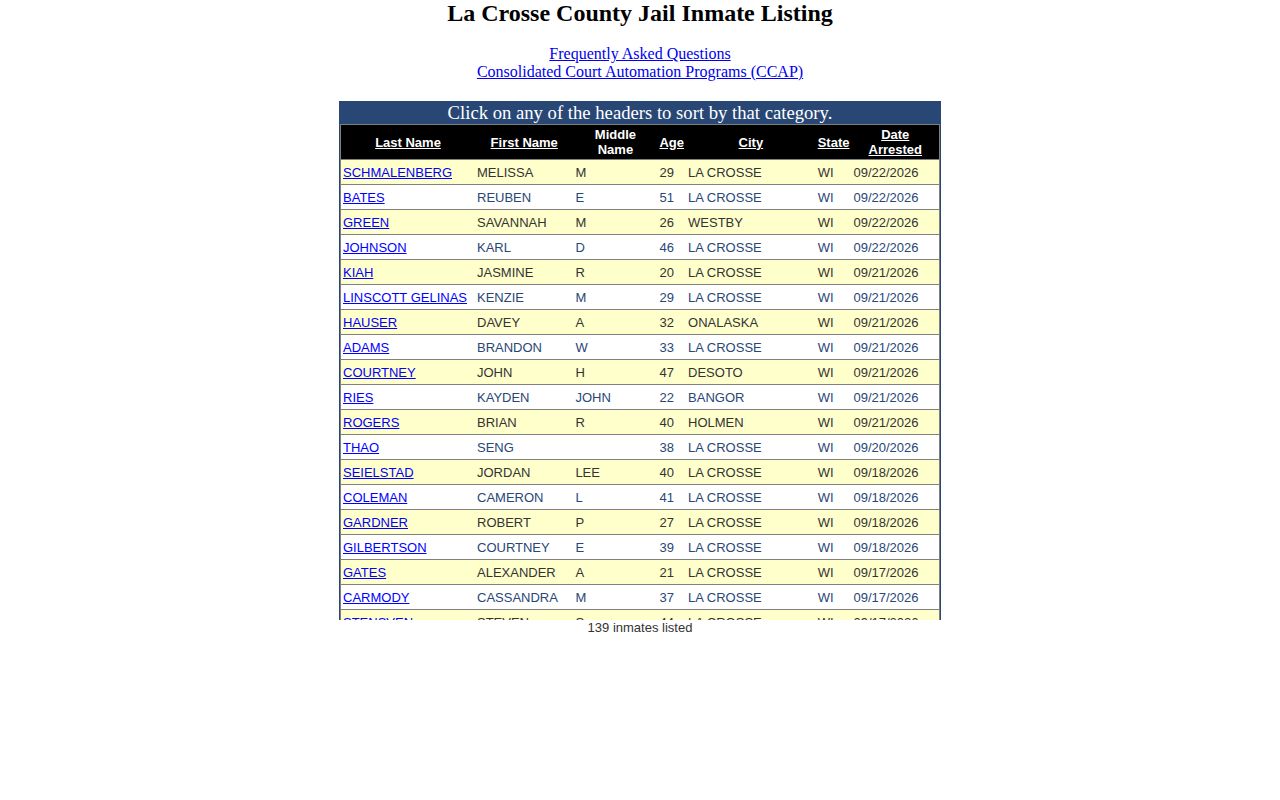
One county's search fields will not match another's. Photo displays and update timing differ across all 72 counties. Wanted alerts and booking records are separate questions. For an arrest photo or booking detail, use the statewide routes on the Wisconsin mugshot and booking-record page.
Check a Wisconsin Warrant
Start any warrant check with the court or agency holding jurisdiction. A warrant is a legal order. Only the issuing office can confirm its scope. It also confirms whether the order remains active. Wisconsin offers no complete public active-warrant search statewide. DOJ alerts and DOC notices serve limited purposes. Marshals profiles do too. A name missing from all of them clears no one. A county roster or case summary works the same way. To find the right office and ask about current status:
- Identify the county and agency tied to the event or court papers. If the name is common, note the case number, county, and date so the office can distinguish people with similar names.
- Open that county sheriff's or local police department's official website. If it offers a warrant lookup, read its scope and update notice. If it does not, use the public contact route on the official agency page and ask which office can confirm a warrant and how to request the record.
- For a filed circuit-court case, use the Wisconsin Court System search and WCCA as a case-status aid. A court summary can show case events; it does not by itself confirm that a warrant is active or cleared.
- If the result remains unclear, contact the circuit-court clerk or the issuing agency for the complete public record and current status. Speak with a lawyer about safe lawful steps to resolve a possible warrant.
Warrant terms differ county to county, and so do local access rules. No single public portal compares active warrants by type across Wisconsin. Never guess a category from a blank result. The issuing office confirms status and process.
Wisconsin Court Status Checks
Wisconsin keeps one doorway for court records. The Wisconsin Court System Case Search opens the statewide circuit and appellate tools. From there, Wisconsin Circuit Court Access (WCCA) provides public circuit-court case summaries. Search by party name, county, case number, or date. County plus case number separates people with common names. WCCA displays charges, hearings, judgments, and sentences. That makes it useful after an arrest or notice.
WCCA is not a booking-photo source. An online summary is not the full file, and sealed records limit public access. Expungement is a court-ordered change, and juvenile or confidential matters may be excluded. The clerk's office holds the circuit-court records and can explain certified copies. A disposition is simply the court's outcome. That outcome alone does not prove an open warrant exists. The Wisconsin Court System case-search page remains the official route to public case summaries.
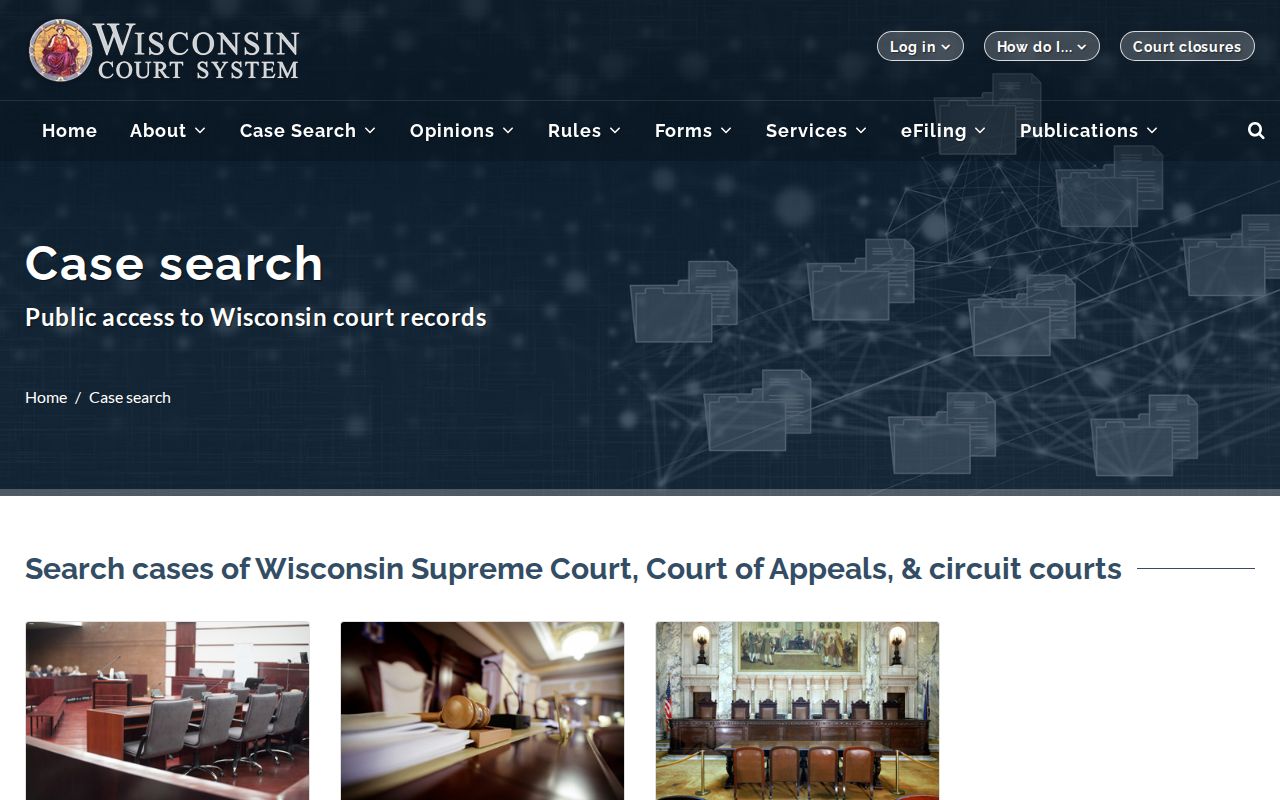
Why might a public search omit a record? The court system's confidentiality and redaction information explains the rules, and the clerk can tell you which files are open and how to request them.
Wisconsin Wanted Tip Routes
Send tips to the agency that issued the alert. The statewide network just distributes notices. Each police department, sheriff's office, or federal district runs its own case, so no single tip line, anonymity promise, or reward applies everywhere; follow the posted terms. For a nonemergency tip, follow these steps:
- Return to the current official alert or profile and confirm that the notice is still active.
- Use the phone, form, or other tip route shown by the issuing agency. If no route appears, use that agency's official public contact page to ask where information should go.
- Share what you know with the agency, not with the person named in the alert or on public social media. Do not promise yourself anonymity or a reward unless the notice states the terms.
Official Tip Route
Statewide alerts: check the current DOJ Crime Alert Network notice for the issuing agency and its instructions. Federal cases work differently. Use the contact method on the relevant U.S. Marshals profile or district page.
If a person may be in immediate danger, call 911 rather than waiting for an online form or alert update. A wanted notice is not a conviction. An accusation or supervision event must not be treated as proof of guilt, and the court's disposition should be checked through the proper case record.