
Are Wisconsin Mugshots Public?
So are Wisconsin mugshots public? The honest answer starts with a presumption. Wisconsin treats most government records as open, booking photos included, and the Wisconsin DOJ public-records page walks through the details. The controlling framework is the Wisconsin Public Records Law, Wis. Stat. §§ 19.31 through 19.39, plus whatever extra limits attach to a particular record. The Department of Justice presumes public access to records held by government authorities. Statutory exceptions can narrow that. A public-interest balancing test also plays a role. Anyone may ask the proper custodian for an existing record. What the law does not do is force every agency to post everything online.
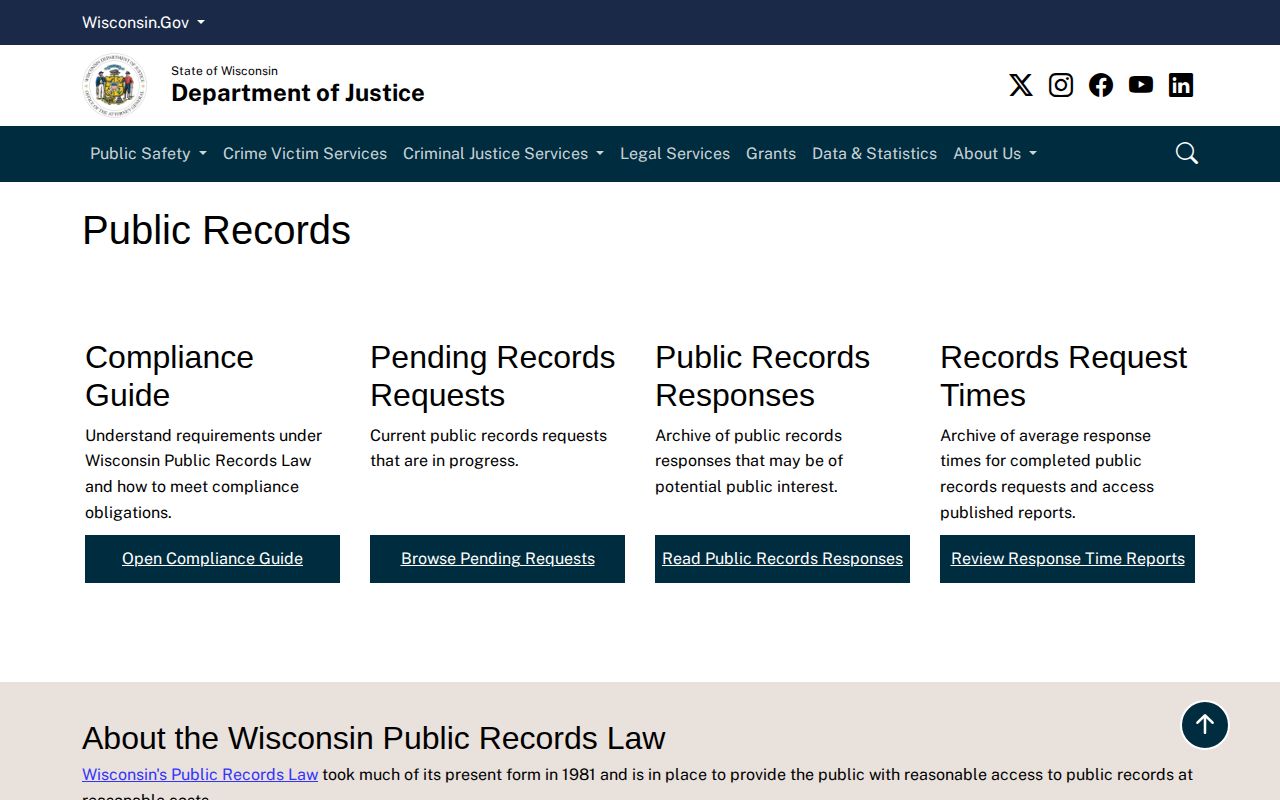
The statewide agency page works only as a first step. Each county sheriff, city police department, or other authority still reviews what sits in its own files. The state DOC is no exception.
Online access and public-record access are not the same thing. A sheriff might post a photo roster, a plain text list, or nothing at all. Updates can lag for days.
A custodian has room to choose, too. One booking sheet may go out whole. Parts of another record get withheld or redacted.
If a private site has copied a mugshot, that copy changes nothing. The site is still not the official custodian. It cannot tell you a case outcome.
Note: An online posting choice does not change the agency's duty to review a later, properly focused public-records request.
Wisconsin Mugshot Law and Case Law
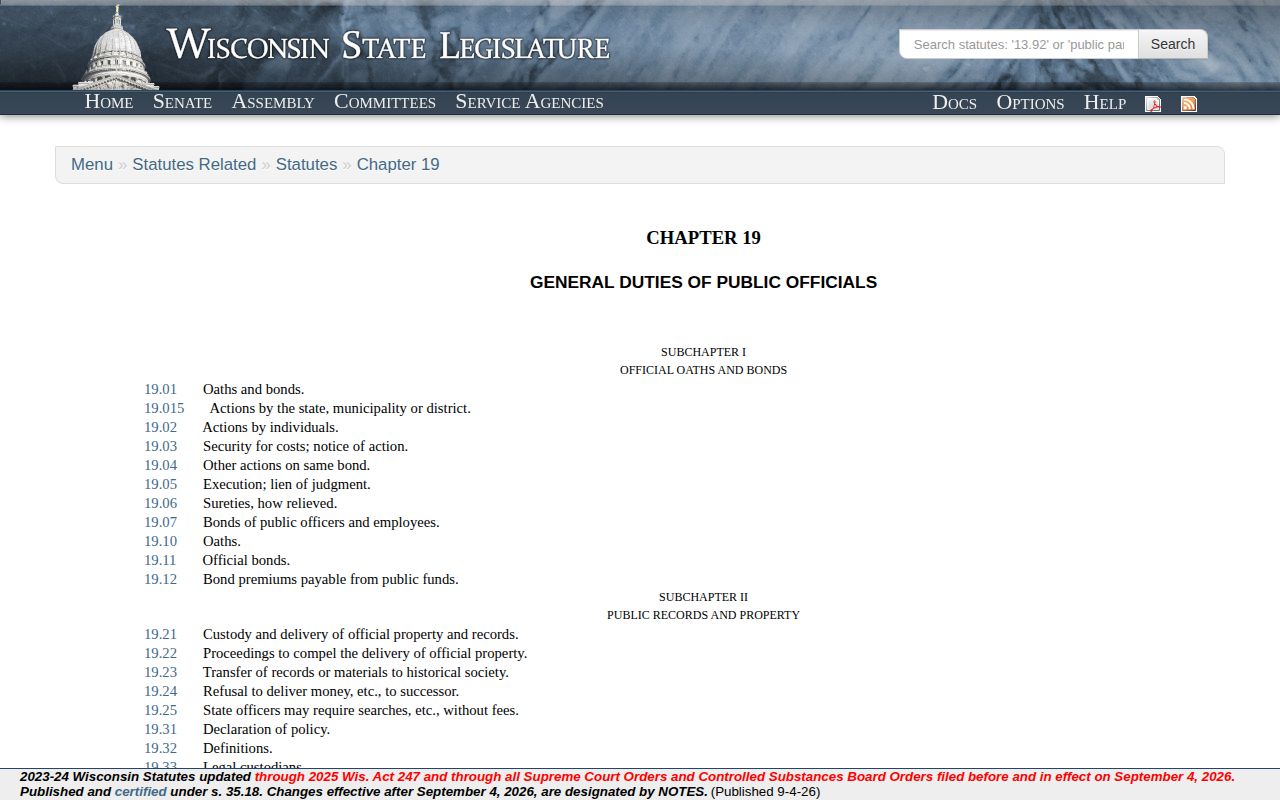
The statutes themselves tell the story. Wis. Stat. § 19.31 sets out the open-records policy. Section 19.32 defines the terms, § 19.35 governs access, and § 19.36 lists limits and allows redaction. Enforcement lives in § 19.37. The Wisconsin statutes, Chapter 19, give the full text. Notice what is missing, though. Nothing here forces a jail to upload booking photos. Wisconsin also has no law requiring an online publisher to remove a booking image for free. A bill proposal or another state's rule would not change that answer.
Wisconsin DOJ traces much of the law's current shape to 1981. The heart of it is the balancing test. A custodian weighs the public's interest in access against a concrete public interest in withholding. That means results turn on the record itself. A blanket claim that arrest material is always open or always sealed will not carry the day. Partial protection is common, and the rest of a record can go out with redactions.
Case law fills in the picture. In Portage Daily Register v. Columbia County Sheriff's Department, 2008 WI App 30, a newspaper sought an investigative report. The Court of Appeals rejected the agency's generic claim that an investigation stayed open. The reason given was not specific enough to count as policy. The ruling does not mean every mugshot must be released or posted. It means a denial needs a real explanation. The DOJ guide also points to Hempel v. City of Baraboo, 2005 WI 120, as a key balancing-test decision.
The practical takeaway is conditional. Ask the agency holding the image. Expect an answer built on the law, any specific exception, and the public interest. A denial should come with the legal ground and policy reasons in writing. Section 19.37 spells out enforcement remedies. The Wisconsin DOJ Public Records Law Guide offers far more detail on the test. It serves authorities and requesters alike.
Wisconsin Juvenile and Withheld Records
Access limits bite hardest when a record could expose a child, a victim, a witness, or details of an active case. Wisconsin Court System guidance treats delinquency records under Chapter 938 and child-welfare records under Chapter 48 as generally confidential, subject to statutory exceptions. Wisconsin DOJ points to §§ 938.396 and 48.396 as the central law-enforcement provisions. A public roster is not permission to name a juvenile or repost an image from a confidential matter.
Redaction happens elsewhere too. Section 19.36 and the balancing test can shield protected identifiers, medical details, confidential sources, victims, witnesses, and information that could harm an investigation. The custodian weighs each request against the law. Guessing a redacted name from another source is a bad idea.
The Wisconsin Court System confidentiality and redaction FAQ explains why the public case search is not a complete index. A case that is invisible does not prove an arrest never occurred. An entry that shows up only proves the booking.
Note: The record's custodian, court status, and confidentiality rules matter more than whether a copied page remains easy to find.
Wisconsin Mugshot Records to Check
Where a person is held decides the right lookup. A county roster tracks local custody. The arresting agency keeps its own booking record. Court files show how a case ended. The state DOC locator covers people in state custody or supervision only, not county booking-photo lists.
| Record source | What it can answer | Important limit |
|---|---|---|
| County or city booking agency | Whether an existing booking record or photo is held | Online photo policy and request decisions vary by custodian |
| Wisconsin court search | Public case entries and available disposition details | Confidential, sealed, juvenile, and expunged cases may be limited or absent |
| Wisconsin DOC | State-custody and supervision records for people in its system | It is not a county booking-photo roster |
For case outcomes, use the Wisconsin Court System case search or the court clerk. State time? That points to the Wisconsin DOC offender-photo search. Local booking paths sit in the statewide Wisconsin arrest and mugshot lookup.
Court records reveal the later status of a case. A booking image and a court entry live with separate custodians, so one never replaces the other.
Request Wisconsin Booking Records
Go straight to the office that holds the record. County booking means the sheriff or jail. A city arrest may sit with the police department. DOC files belong to state corrections. Ask for what already exists: a booking photo, booking sheet, intake or release record, or media log. A name and a tight date range help. Wisconsin DOJ reminds requesters that agencies need not create a new record, answer a research question, or assemble data that never existed. Write plainly. Get a cost estimate before approving any big copy job. No fixed statewide deadline exists. Wisconsin law asks for a response as soon as practicable and without delay, though scope, volume, review, and redactions all shape the timing. Denied? Request the reason and legal basis in writing. A proper denial names the public interest behind the withholding rather than leaning on a broad label.
- Identify which agency handled the arrest or holds the record.
- Name the record sought and narrow the date range or event details.
- Ask how copies will be sent and whether a fee estimate applies.
- If any part is denied, ask for the specific rule and balancing reasons.
- Use the available review path under Wis. Stat. § 19.37 if the dispute remains.
Note: Ask for existing records by date and event; an open-records request does not require an office to create a new report.
Wisconsin Expungement and Photo Copies
Adult expungement in Wisconsin is narrow. Wis. Stat. § 973.015 sets the eligibility test. Eligibility turns on age, penalty limits, and exclusions. The judge must also find expungement serves the person without harming society. The order comes at sentencing, not later. The person must then finish the sentence successfully. There is no general petition that wipes old arrests or convictions after a set number of years. The court system's CR-266 form spells out the scope plainly. It touches the court record of a conviction. It does not vacate the conviction. Police, Crime Information Bureau, other law-enforcement, and district-attorney records stay untouched. So a court order never auto-clears a jail booking image, an agency file, a news story, or an online publisher's copy. Juvenile relief runs on Chapter 938's own rules. It uses separate forms. Assume nothing there. Not every juvenile record qualifies for expungement or public release. A court order or updated disposition can explain why an official record should change, yet each custodian and private host controls a separate copy. Search snippets can outlive the source page. Retention differs from online access. Wisconsin's County General Records Schedule lists mugshot images and booking records as permanent minimum-retention items. Jail registers and arrest records get separate schedules, some with archival transfer or confidentiality terms. A permanent record may sit in a county system or archive, invisible to web searches. The County General Records Schedule helps identify the record series. Only the custodian can confirm where a specific file now sits. The core split is court record versus everything else made during an arrest. Expungement covers only the record named in the order. It does not turn a booking into a conviction. It does not erase every copy made elsewhere.
Wisconsin CIB Fingerprint Removal
Wisconsin keeps a separate track for certain arrest fingerprint cards held in the state criminal-history repository. DOJ's Crime Information Bureau guidance lists the qualifying situations. A person released without charge may qualify. So may someone cleared of all charges in court. Dismissal, a not-guilty result, or no charges filed all count as examples. A fingerprint is required for matching, and DOJ supplies form DJ-LE-250B for the request. The DOJ arrest-information removal instructions describe a no-fee route for eligible fingerprint information. One catch stands out. An expunged court conviction does not qualify for removal from the criminal-history record by itself. FBI copies need the separate federal process. This remedy is narrow. It lifts a CIB fingerprint card, not a county booking image or a website copy.
- Custodian
- The government office that keeps the record and decides a request.
- Expungement
- A court-ordered change to the record specified by the law and order.
- Disposition
- The recorded outcome of a court case, such as dismissal or conviction.
Note: A fingerprint-card request, an expungement order, and a booking-photo correction are three separate actions handled by different record holders.
Wisconsin Busted Newspaper Corrections
Once an official record is corrected or a court order is entered, reach out to each private host that ran the old information. Save the page address. State the error or the later outcome plainly. Send only the documents the host asks for.
Remember that a private takedown policy is voluntary. A free request guarantees nothing. And a fix on one site leaves other copies in place.
The Busted Newspaper request page spells out a no-cost submission built on the listing URL and contact details. It will take supporting material for a dismissal, an acquittal, charges the prosecutor declined to pursue, expungement, or a sealing order. An attorney letter may also work.
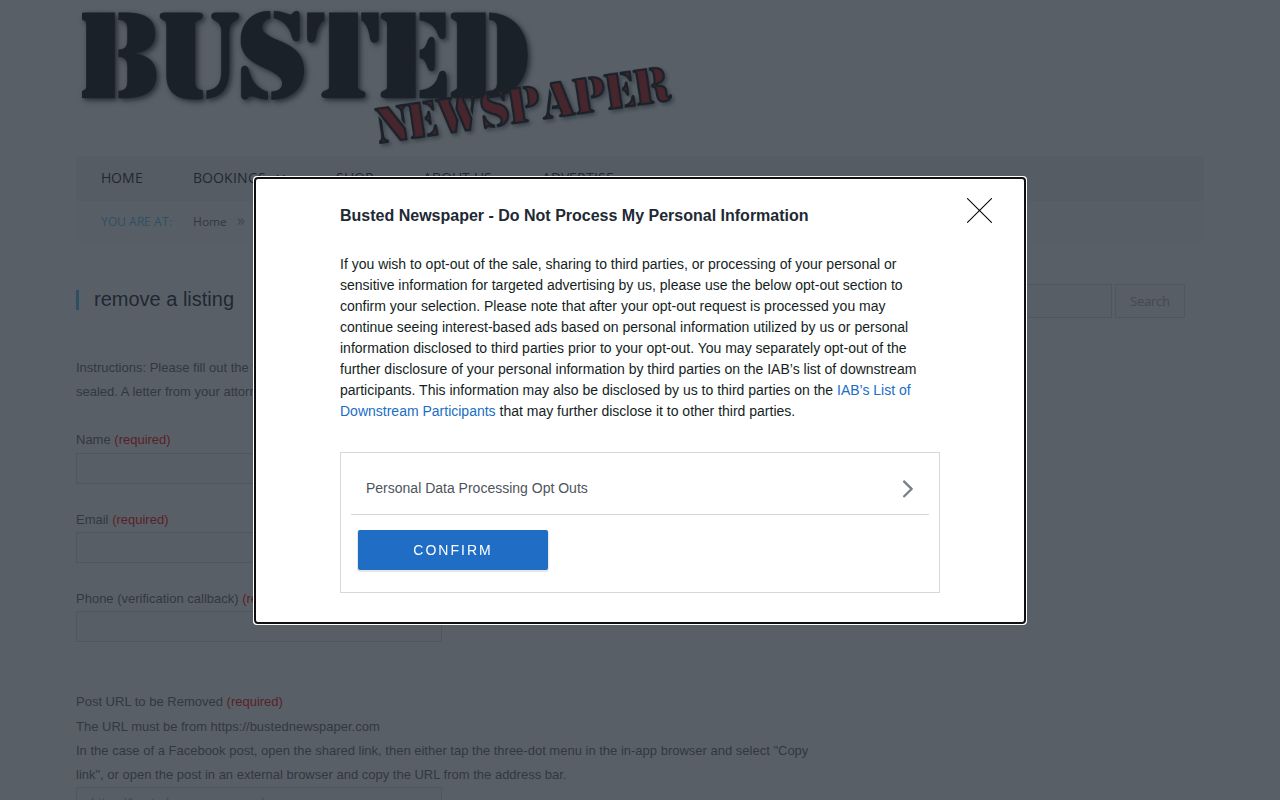
The publisher quotes a review window of roughly five to ten days. A request is not automatic, cached copies can linger, so check the live policy for the current steps.
RecentlyBooked Wisconsin Record Updates
RecentlyBooked offers a no-cost route to fix or update a listing. The RecentlyBooked policy covers dismissals, expungements, sealing orders, identity errors, outdated entries, juvenile material, and duplicate posts.
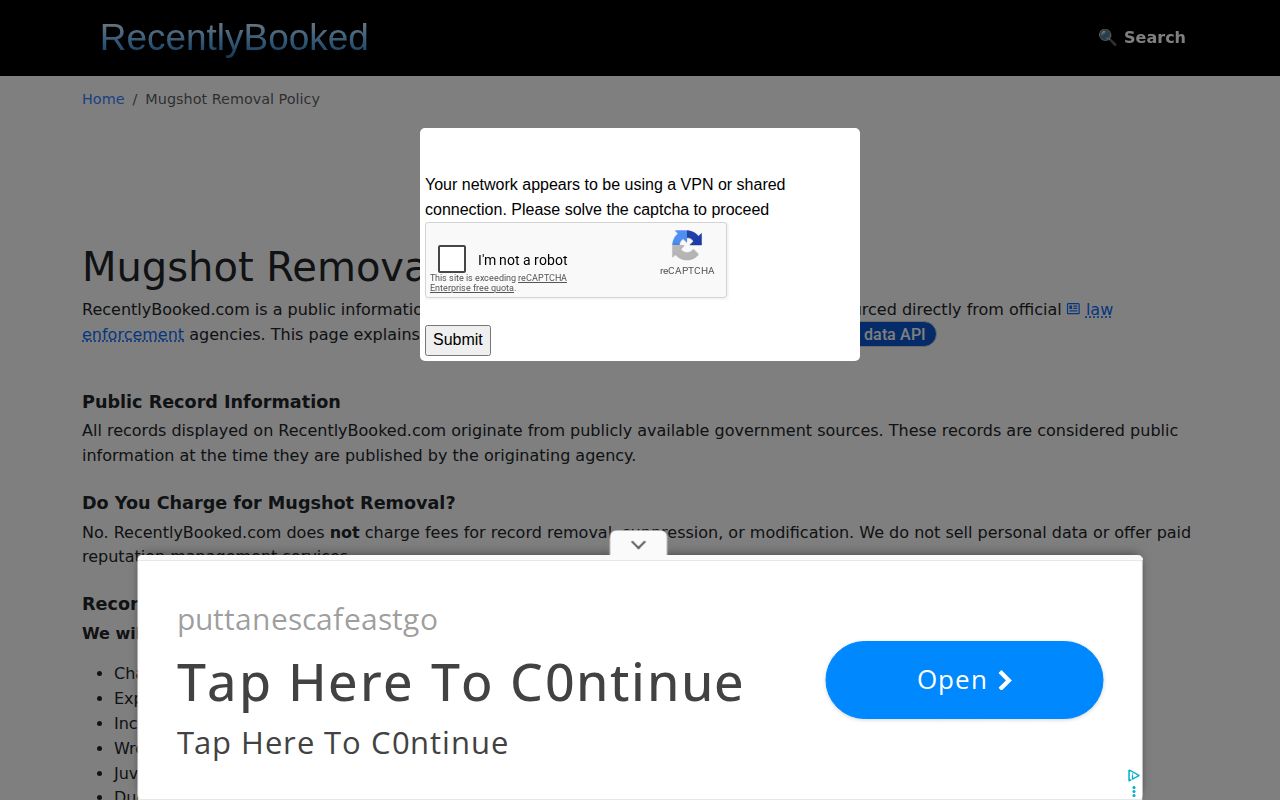
The form itself wants the page URL, your name, the arrest date, and the state and county involved. Give a reason plus any relevant court records. Accurate current public information generally stays up. The policy also warns that search engines can keep a cached page even after an update. Wisconsin's RecentlyBooked page works on a rolling past-30-day window. It shows only a subset of counties, and counts shift, so treat it as a partial index rather than a full statewide roster.
Mugshots.com Wisconsin Record Corrections
Mugshots.com's record-maintenance page lays out a no-cost process for qualifying corrections. Its grounds include expungement, sealing, no information, record restriction, identity theft, or death. A favorable outcome may bring an update instead of deletion.
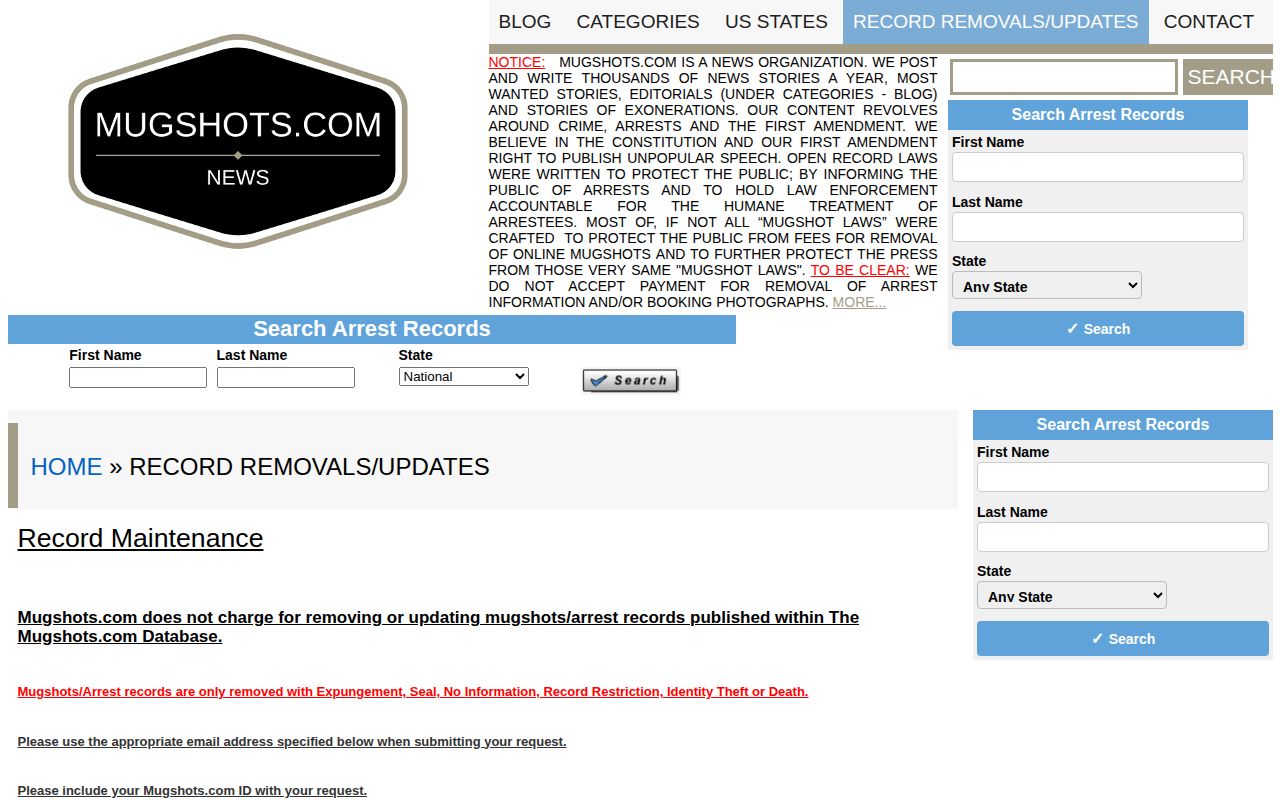
The site wants legal proof through its stated process. It targets ten business days but promises nothing. Its Wisconsin section is an unofficial historical index that disclaims completeness and timeliness, not a live county custody list.
Note: A private site's processing target does not bind a public agency or change the court's official record.
Other Wisconsin Aggregator Policies
Arrests.org's Wisconsin contact path reaches the site, nothing more. It publishes no detailed promise that a current, accurate listing comes down. Nor does it offer any fixed deadline. Its state index covers only some Wisconsin counties. Treat it as a secondary discovery page rather than an official record source. Mugshots.zone shows a similar gap. No Wisconsin state page appears there. The general Mugshots.zone site describes free correction routes on county pages. Those routes cover errors, dismissals, and other qualifying outcomes. That promises neither Wisconsin coverage nor a guaranteed result. Use the site's contact path; don't guess a Wisconsin URL. For an official answer, go back to the record holder. That means the sheriff, jail, police department, court, or DOC. News stories follow a different path. Send the outlet a factual correction that cites the public disposition. It may add context rather than delete an accurate report. Never pay anyone promising a guaranteed removal. Search-engine updates are separate and never erase the original record.