
Notable Wisconsin Arrest Records
Public attention does not change what an arrest record is. A booking entry captures one agency action at one moment. The legal outcome lives elsewhere. A judgment and later court orders show the result. State archives, courts, and public agencies document both the event and the record path.
The original photo and the court file may sit in different places. County police or sheriff records are the route for a booking image. Filings and case status come from the circuit-court clerk and the Wisconsin Court System.
Wisconsin Cases and Custodians
Each case in the table points to its primary original record route. The court opinions and official papers back the outcome noted, while any booking image sits apart as its own agency record.
| Case and arrest year | Documented disposition | Original record route |
|---|---|---|
| Edward “Ed” Gein, 1957, Waushara County | WHS reports an insanity finding, later fitness for trial, conviction, and confinement at Mendota Mental Health Institute. | WHS holds identified historical images; request local agency and court records from the relevant custodian. |
| Jeffrey Dahmer, 1991, Milwaukee | Convicted of 15 Wisconsin murders and sentenced to life; he was killed in prison in 1994. | Milwaukee County Circuit Court, Milwaukee police, and county-jail records; a historical finding aid describes trial materials. |
| Steven Avery, 2005, Manitowoc County | Convicted of first-degree intentional homicide as a party and firearm possession; the Court of Appeals affirmed the judgments and postconviction order. | Manitowoc County Circuit Court case 2005CF381 and sheriff or jail booking records. |
| Brendan Dassey, 2005, Calumet County | Convicted of three offenses in the Halbach case; the Court of Appeals affirmed the judgment and postconviction order. | Manitowoc County Circuit Court case 2006CF88, appellate records, and Calumet County agency files, subject to juvenile limits. |
| Jake Patterson, 2018, Barron County | Pleaded guilty; in 2019 he received two consecutive life terms without parole and a consecutive 40-year kidnapping sentence. | Barron County Circuit Court plea, judgment, and sentencing records; sheriff or jail records for booking material. |
| Darrell Brooks, 2021, Waukesha County | Convicted in 2022 of six first-degree intentional homicides and other counts; the sentence included six consecutive life terms without parole. | Waukesha County Circuit Court complaint, judgment, transcript, exhibits, and county booking records. |
| Maxwell Anderson, 2024, Milwaukee County | A jury returned a 2025 verdict; the county reports life without parole for homicide plus consecutive sentences on other counts. | Milwaukee County Circuit Court and Milwaukee police or county-jail records. |
These entries reflect outcomes as the named sources describe them. Archived copies and originals are not the same thing. Nor does every record stay online.
Ed Gein's Wisconsin Archive Records
Edward "Ed" Gein was arrested in November 1957 after investigators searched his Plainfield property. The Wisconsin Historical Society's biography lays out what followed. An insanity finding came first. In 1968 he was ruled fit for trial. Judge Robert Gollmar convicted him, and he spent the rest of his life confined at Mendota Mental Health Institute. Those details belong to the WHS account and should not be stretched into claims about other cases.
The WHS historical essay carries the disposition story, and the placeholder
The WHS collection search turns up "Ed Gein at State Crime Lab" and other November 1957 photographs. An archive copy like that may not be a county booking card. For the original arrest, court, and investigative files, ask the Waushara County custodian or the collection staff, and cite the record type and date to narrow the request.
The separate WHS catalog item for James Gumina shows how an older prison photo gets listed with a title and collection details. He is a different person with a different record. Even so, the entry shows the archive route for historical prison material.
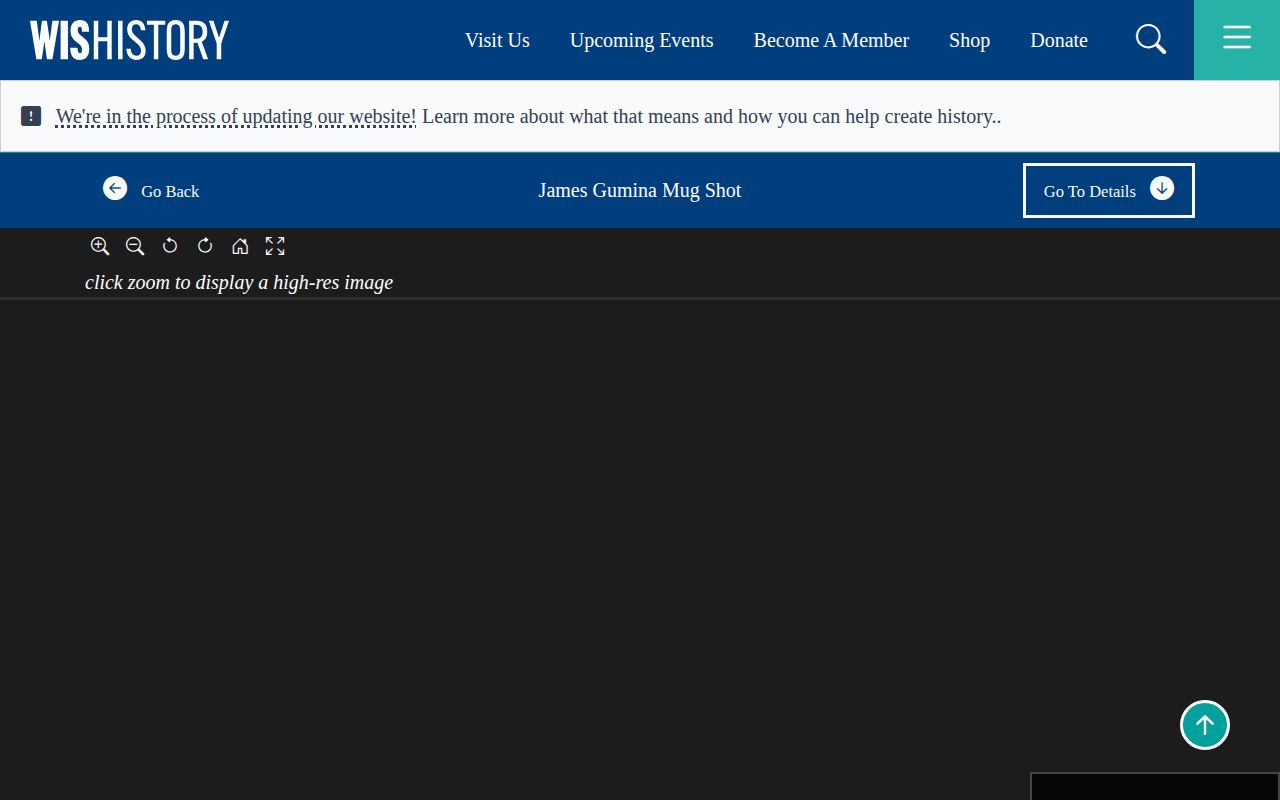
The catalog screen shows the item context but no face. A title can guide a records request. Still, it cannot prove a county jail made or holds that same photograph.
Dahmer's Milwaukee Court Records
Jeffrey Dahmer was taken into custody in Milwaukee in July 1991. The case remains one of the most infamous arrest files in the state. He was convicted of 15 of 16 Wisconsin murders and received a life sentence. Prison officials recorded his death there in 1994. A historical collection at the county level holds trial-era newspapers. It also holds related material for anyone tracing the full case arc.
The Milwaukee County Circuit Court criminal division holds the original case file. Booking papers live elsewhere. Milwaukee police and county jail custodians keep those records, within retention rules and public-records decisions. The finding aid is helpful. It is not the booking record. A widely circulated mugshot may be a press or archive copy. Ask the custodian for the true image record.
Out-of-county cases work the same way. Route a photo request to the county that made the booking. Route the case file to that county's circuit-court clerk. A later prison record is never the right source for an earlier county booking image.
Avery and Dassey Case Records
Steven Avery's arrest came in November 2005. He was charged in the Teresa Halbach homicide case. A 2011 published opinion from the Wisconsin Court of Appeals says a jury convicted him as a party to first-degree intentional homicide, and also of being a felon in possession of a firearm. That opinion affirmed the judgments and the postconviction order. Later postconviction filings are separate procedural steps rather than changes to that affirmed judgment. The original case is Manitowoc County Circuit Court case 2005CF381, and the complaint, trial exhibits, and later filings are court records. The booking image sits with a county agency, so request it from the Manitowoc County Sheriff or jail custodian.
Brendan Dassey was sixteen when he was charged in the same investigation. The Court of Appeals' 2013 opinion lists his convictions. They cover first-degree intentional homicide, second-degree sexual assault, and mutilation of a corpse, each as a party to a crime. The opinion affirms his judgment and postconviction order. His adult criminal case is Manitowoc County Circuit Court case 2006CF88. Appellate history sits with the Wisconsin Court System. Calumet County and the investigating agencies hold the booking and investigative records they created.
Dassey's age matters for anyone searching. He was a juvenile at arrest, so Chapter 938 confidentiality rules apply to any search result or reproduction. A public adult docket does not remove those limits. Ask for one specific record, and let the clerk or agency say what can be released.
Primary sources anchor these cases. The Avery appellate opinion spells out his affirmed outcome. The Dassey appellate opinion does the same for his. For docket information, start with the Wisconsin Court System case-search page, the public entry point for WCCA summaries. A summary is not the file. The circuit-court clerk holds the complete record. Request certified copies there when it counts.
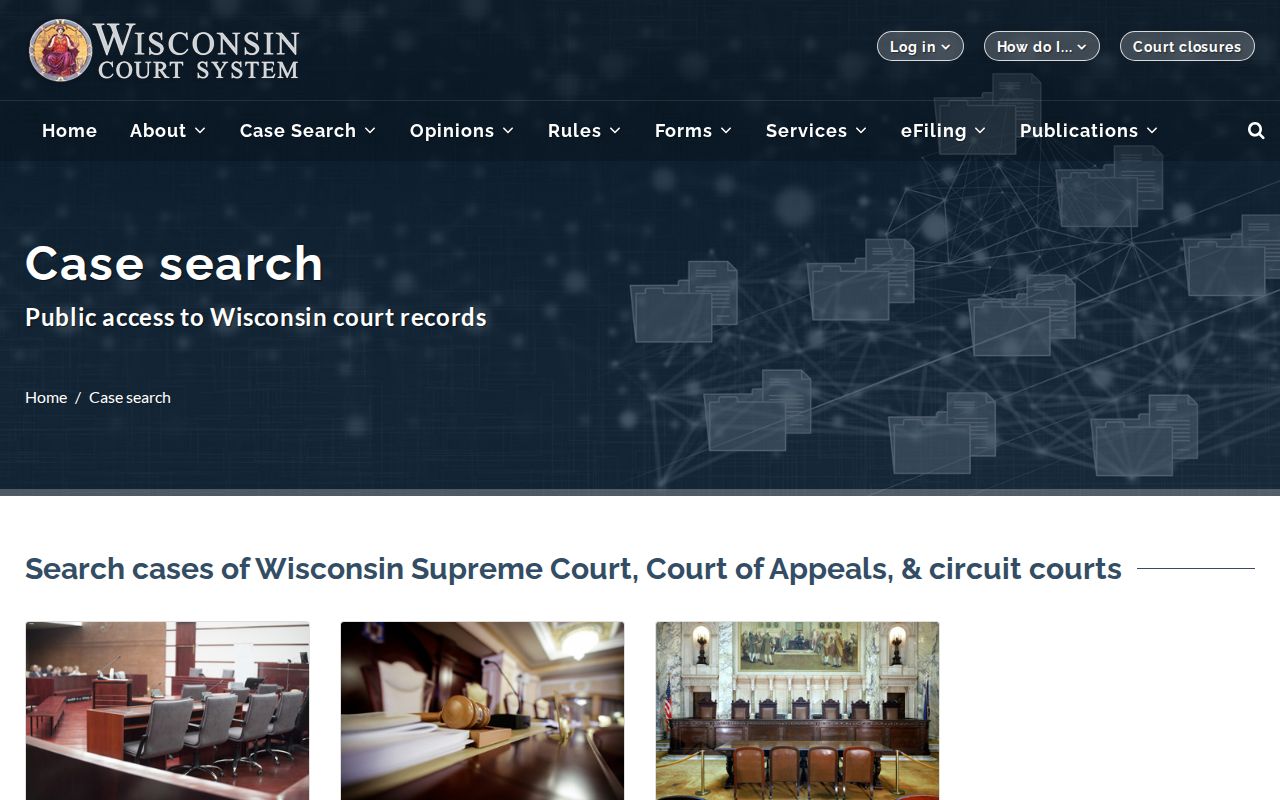
Case-search results are a disposition route, not a booking-photo archive. Confidential, sealed, expunged, and juvenile records may be missing from a public summary.
Patterson and Brooks Court Files
Jake Patterson was arrested in January 2018. Jayme Closs had escaped and reported the abduction. He later pleaded guilty. In May 2019 he received two consecutive life sentences without parole for the homicides, plus a consecutive forty-year term for the kidnapping. The Wisconsin Third Branch covered the prosecution and sentence in spring 2019. His complaint, plea, judgment, and sentencing record are Barron County Circuit Court records. Barron County law enforcement holds the initial booking material.
Darrell Brooks was arrested after the November 2021 Waukesha Christmas Parade attack. Waukesha County's official criminal complaint is the primary charging document. In 2022 a jury convicted him on six counts of first-degree intentional homicide and many other counts. The sentence stacked six consecutive life terms without parole. Additional prison time runs consecutive to those terms. His complaint, judgment, transcript, and exhibits are Waukesha County Circuit Court records. The county custody system created the booking record.
Turn to the documents that fix each stage. The Wisconsin Third Branch case report documents Patterson's sentence. The Waukesha County complaint identifies Brooks's formal charges. A complaint charges; a judgment states the result, so use the docket and judgment when describing the verdict and sentence.
Anderson's Milwaukee Case File
Maxwell Anderson was arrested in April 2024. He was charged in the death of Sade Robinson. Milwaukee County's official statements report a 2025 jury verdict. The sentence was life without parole for first-degree intentional homicide, with consecutive terms on other counts. His complaint, docket, judgment, and exhibits are Milwaukee County Circuit Court records. Milwaukee police and the county jail created the arrest and booking records.
The county's verdict statement and sentencing statement report the outcome directly. Milwaukee County's criminal-court division handles case records. A booking image follows a different path. The police or jail custodian holds it. A media photograph is not the original agency record.
Note: When a case has both a verdict and a later sentence, cite each procedural step accurately rather than treating a charge as a conviction.
Wisconsin Records-Law Litigation
The Dahmer records dispute is a public-records case, not another arrest entry. In WTMJ, Inc. v. State and related proceedings, the Wisconsin Supreme Court weighed media requests for DOC institutional files on Jeffrey Dahmer and Jesse Anderson. The opinion discusses redacted disclosure and the custodian's duty to balance access against applicable interests. Even a notorious inmate's file gets this treatment. Each record is decided on its own. An agency file is not an open image collection.
The rule comes from the Wisconsin Supreme Court opinion itself. Wisconsin public-records law presumes access to existing records. Exceptions and balancing apply. The official Chapter 19 text supplies the statute, and the court's Dahmer records opinion shows how one request was handled.
Wisconsin DOJ's Public Records page explains the request framework for existing government records. Name the custodian and the record you want. That office decides. It determines what must be withheld or redacted.
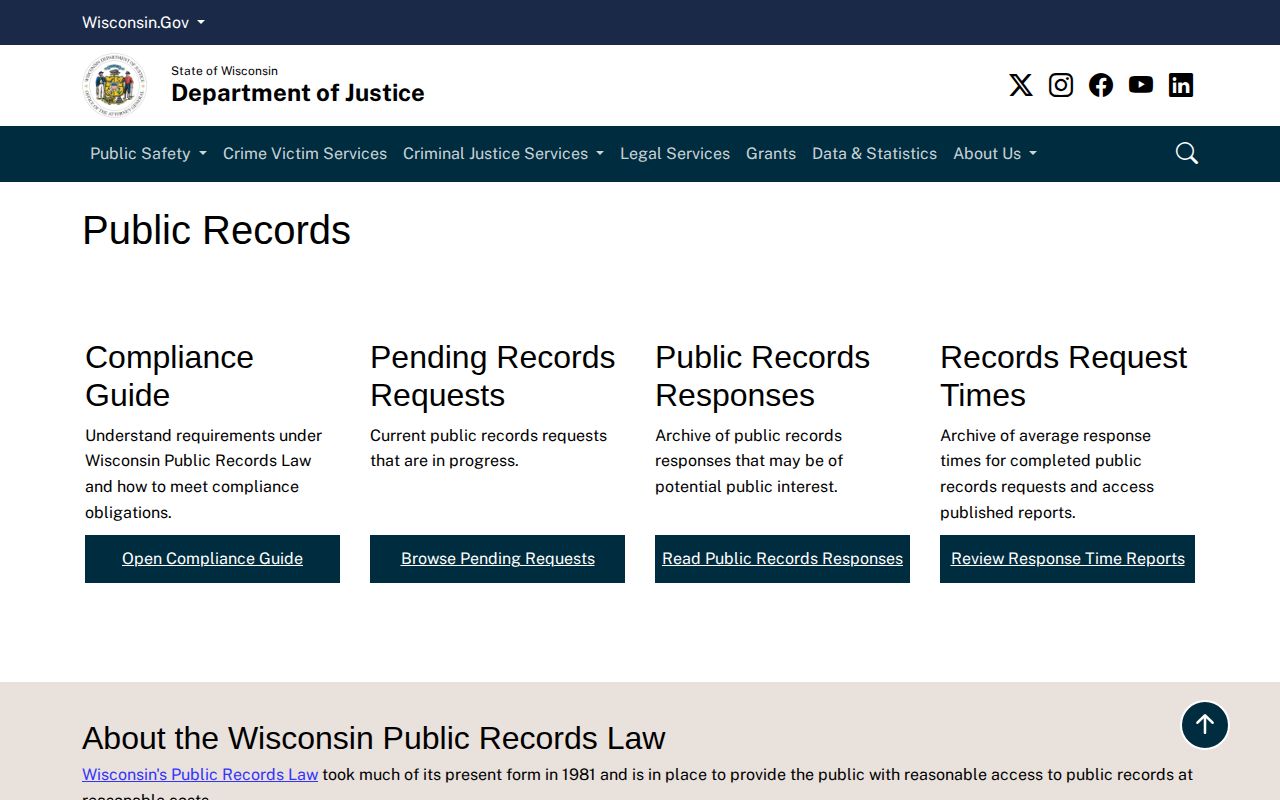
The DOJ page adds statewide context. For the Dahmer DOC litigation itself, the Supreme Court opinion remains the source.
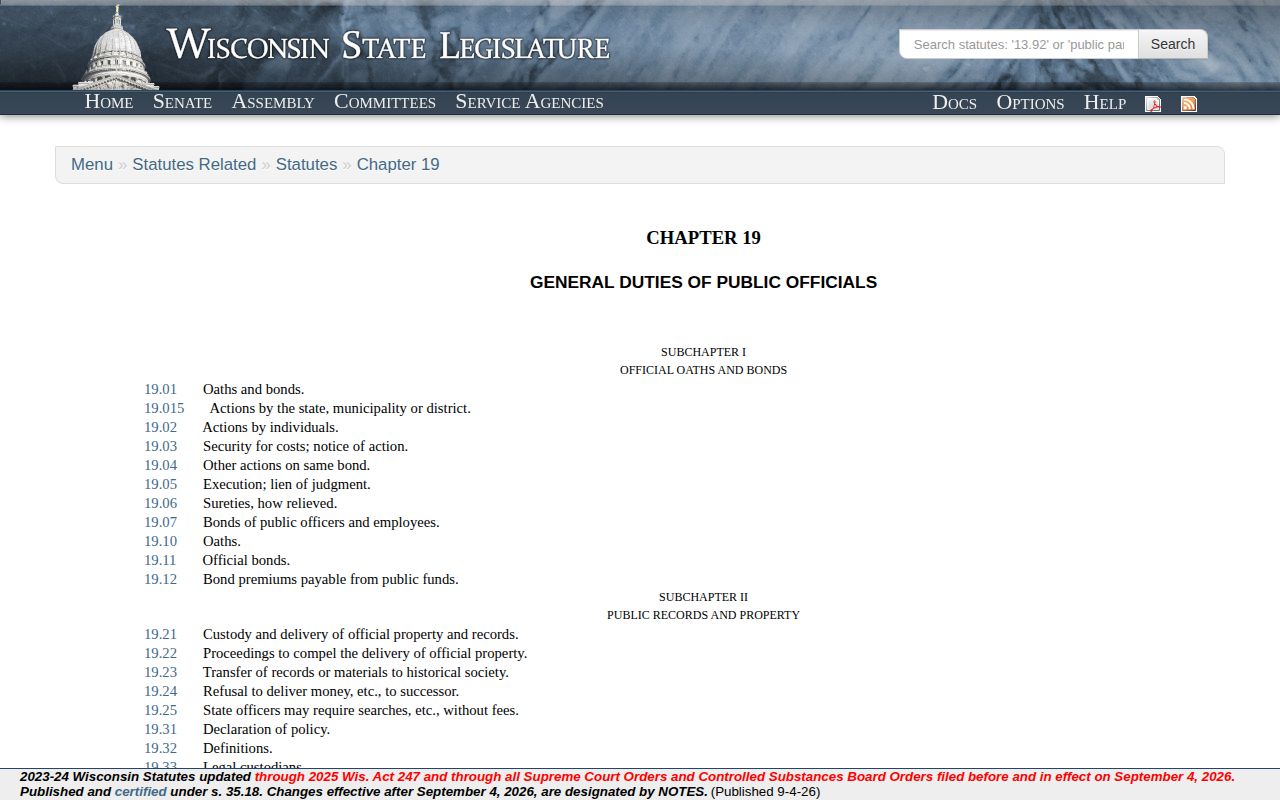
The online statute interface serves one purpose: it shows the text of the law itself. It will not pull up a case file or a booking image for anyone. For the actual record, go through the court system or the agency that holds it.
Note: A single disclosure decision can release some pages while redacting others, so name the exact record or time period you want when asking.
Look Up Any Wisconsin Arrest
That custody-versus-court split holds for everyday searches too, not just famous cases. Want an original photo? Start with the agency that made the arrest or handled the booking. A clerk or court system is the right place to confirm how the case ended. Older prison materials sit in an archive catalog that lists collections, series, boxes, folders, and microfilm reels.
- Identify the place and date. Note the county or city, approximate arrest date, and agency if known. If the person may have moved through state custody, record that as a separate search path.
- Ask for the original record. Request the specific booking photo or arrest report from the agency that created it. Give the name, approximate date, and case or booking number if available.
- Check the case result. Search WCCA by name and narrow with county, case number, or date when the system permits. Ask the circuit-court clerk for a complete or certified file when an online summary is not enough.
- Follow age and custody. Contact the Wisconsin Historical Society for an identified archival collection, or DOC for an administrative prison record. A missing online result does not prove that no record exists.
The Wisconsin statewide arrest-record path sorts out how county booking records differ from DOC and court files. For old prison photographs, the Wisconsin archive and retention records page maps the collection and request route. Each custodian decides access on its own under state law.